
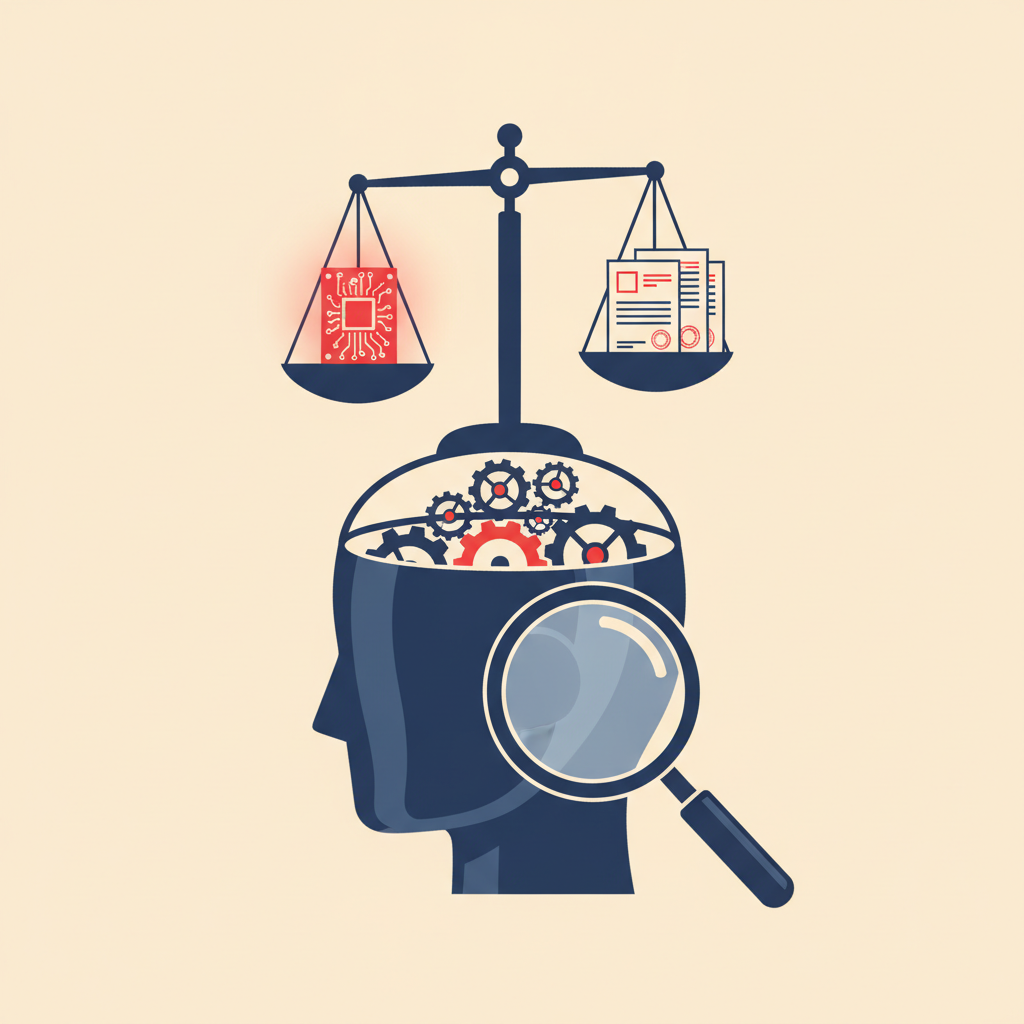
The mistake most enterprises make with AI regulation is treating it as a legal problem. It is not. The EU AI Act compliance framework is, at its core, an engineering problem with legal consequences — and the teams that understand this distinction will be significantly better positioned when enforcement reaches their sector.
The Act's obligations for high-risk AI systems are not abstract policy statements. Articles 9 through 15 decompose, almost directly, into testable engineering activities: risk assessments, dataset audits, system documentation, logging configurations, transparency outputs, oversight controls, and adversarial evaluations. The legal language is the surface. Underneath it is an engineering checklist that either produces evidence continuously or produces a compliance crisis at audit time.
What High-Risk Classification Actually Means for Your Stack
The EU AI Act assigns risk categories based on intended use and deployment context. Systems used in credit scoring, insurance underwriting, employment screening, medical device support, or critical infrastructure management are subject to high-risk obligations regardless of the underlying technology. A large language model embedded in a loan origination workflow carries the same obligations as a classical machine learning classifier performing the same function.
This matters because many enterprise AI stacks are composite. A vendor model powers a feature inside a platform your team built, which feeds a decision workflow your business unit operates. Each layer adds complexity, but the obligation lands on the deploying enterprise. Regulators are not interested in your vendor's terms of service. If the system makes or materially influences a consequential decision about a person, the enterprise deploying it is accountable for its compliance posture.
The Accountability Trap Is Wider Than Most Teams Assume
Regulated enterprises tend to scope their compliance thinking around systems they built internally. This is a significant gap. The Act's obligations extend across every high-risk AI system in production, whether built in-house, purchased from a vendor, or integrated via API. That creates an immediate action item: a portfolio-wide inventory.
The inventory is not a spreadsheet exercise. It is a structured mapping that identifies each AI system, its classification rationale, the obligations that apply, the evidence each obligation requires, and the current state of that evidence. Without this map, compliance work is reactive and incomplete. With it, engineering and legal teams share a common operating picture, and prioritization becomes defensible rather than political.
Do this first. Everything else depends on knowing what is in scope.
Converting Obligations into Engineering Activities
The practical translation of each article into engineering work is where most teams stall. The language of the Act is necessarily general. The engineering question is specific: what, exactly, does Article 15 require me to test, and how do I produce evidence that my system meets it?
One useful pattern is to treat each obligation as a set of what might be called Atomic Compliance Units — discrete, checkable requirements that can be assigned to a system component, a testing stage, or a monitoring job. Article 9 on risk management becomes a structured risk register updated on each model version. Article 10 on data governance becomes dataset lineage documentation and bias evaluation against defined demographic dimensions. Article 15 on accuracy, robustness, and cybersecurity becomes a battery of adversarial evaluations — boundary tests, distributional shift probes, prompt injection scenarios for LLM-based systems — that run automatically on every release candidate.
This decomposition serves two purposes. It makes compliance work tractable for engineering teams who need specific tasks, not legal summaries. And it makes evidence generation a byproduct of the development and deployment pipeline rather than a separate, manual process.
📊 Related research
The State of AI Assurance 2026
A strategic analysis of why surging AI assurance budgets are failing to deliver mature, resilient programs, and a roadmap for correcting course by addressing foundational gaps in governance, talent, and scaling processes.
Technical Documentation and Record-Keeping Are Not Afterthoughts
Articles 11 and 12 are frequently underestimated. Technical documentation requirements under the Act are detailed: intended purpose, performance metrics, training data characteristics, known limitations, testing methodologies, and post-deployment monitoring arrangements must all be captured and maintained. Record-keeping obligations require that logs of system behavior, human oversight decisions, and significant incidents be retained in formats accessible for regulatory review.
The failure mode here is treating documentation as something produced after the engineering work is done. That approach creates two problems. The documentation is retrospective and often incomplete because the people who made key design decisions have moved on or cannot reconstruct their reasoning. And the process is expensive — a documentation sprint before an audit consumes significant engineering time and still produces artifacts that reviewers find thin.
The alternative is to instrument documentation into the development lifecycle itself. Architecture decision records, model cards, dataset datasheets, and evaluation reports generated at each stage become the technical documentation with minimal additional effort. This is not a new idea in software engineering; applying it specifically to AI Act obligations is the adaptation required.
Post-Market Monitoring Closes the Compliance Loop
High-risk AI systems under the Act require ongoing monitoring after deployment. This is not a one-time certification event. Performance, fairness characteristics, and behavioral boundaries must be tracked in production, with defined thresholds that trigger review or intervention.
For AI teams, this means the evaluation work does not end at release. It continues as a monitoring function, watching for distributional drift, demographic performance divergence, anomalous outputs, and cybersecurity indicators. Human oversight controls described in Article 14 need to be real mechanisms — not nominal override capabilities, but operational processes that can detect when automated decisions warrant human review and can route them accordingly.
Post-market monitoring also generates the evidence base for demonstrating ongoing compliance. A regulator reviewing your systems after an incident will want to see not just that you tested the system before deployment, but that you tracked its behavior in production and responded appropriately when signals emerged.
Why Assurance Must Be Continuous, Not Periodic
The EU AI Act compliance clock is running regardless of where your organization is in its readiness journey. The practical question is whether compliance becomes a continuous engineering property or a periodic scramble.
Teams that operationalize obligations — turning them into pipeline stages, monitoring jobs, and automated evidence generators — find that audit preparation compresses dramatically. The binder a regulator wants becomes a report generated from existing artifacts, not a project mobilized under time pressure.
This is ultimately why AI assurance matters beyond regulatory compliance. An AI system that is properly evaluated, documented, monitored, and governed is a system its operators understand and can defend. In regulated industries, where consequential decisions affect people's access to credit, healthcare, employment, and insurance, that understanding is not optional. It is the foundation of responsible deployment — and the foundation of durable trust in the systems enterprises are building their operations around.
The binder a regulator wants becomes a report generated from existing artifacts, not a project mobilized under time pressure.
Go deeper — gated research
The State of AI Assurance 2026
A strategic analysis of why surging AI assurance budgets are failing to deliver mature, resilient programs, and a roadmap for correcting course by addressing foundational gaps in governance, talent, and scaling processes.