
The Statistic That Should Concern Every Internal Audit Director
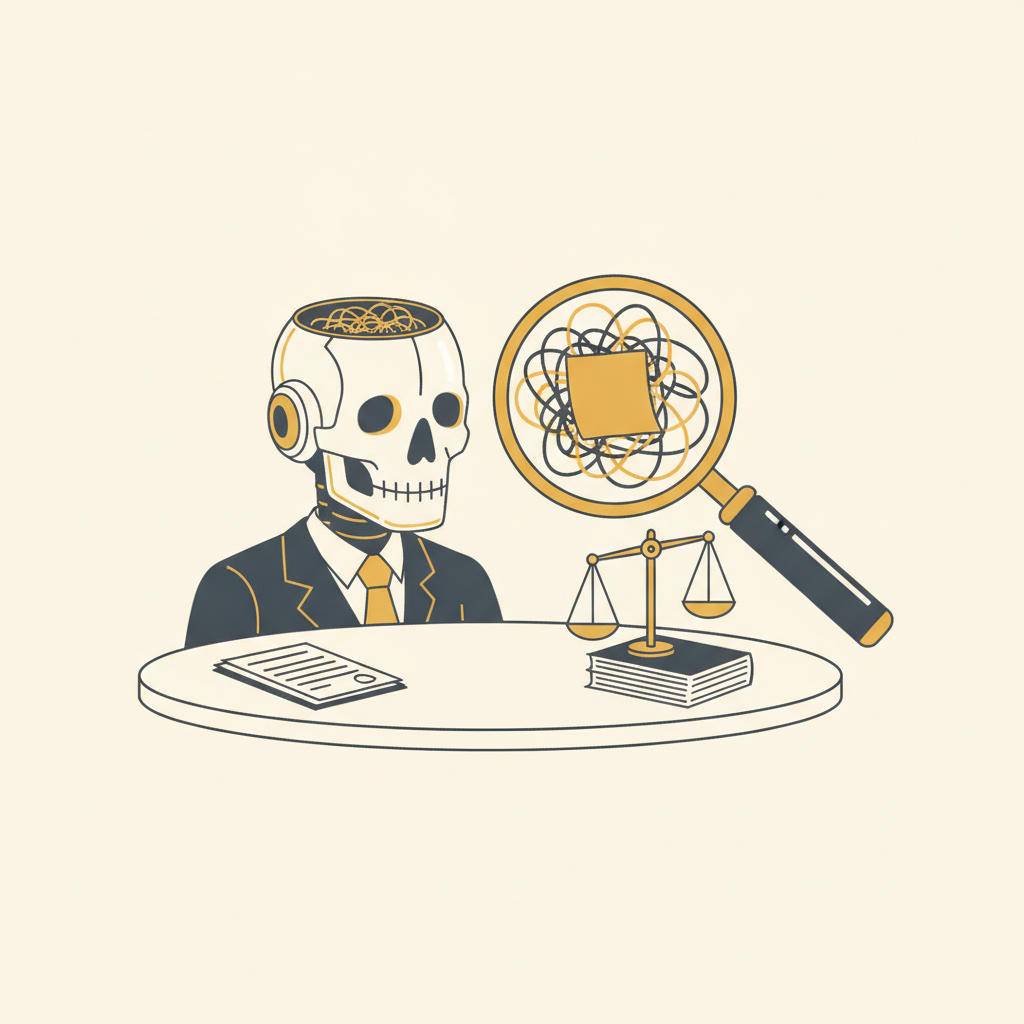
The IBM Institute for Business Value 2024 AI governance survey found that 73% of enterprises are operating without a structured, documented AI governance programme. The same survey surfaces a perception-reality gap that is, in practical terms, more dangerous than the headline number: a majority of those enterprises self-reported as prepared for regulatory review. That combination — widespread absence of structured governance paired with widespread confidence in readiness — is precisely the profile that produces audit surprises. Not minor findings. Material control deficiencies.
What 'Ad-Hoc' Actually Means in Audit Language
Ad-hoc governance is a term that sounds transitional. In practice, it describes a specific condition: decisions about AI risk, testing, deployment approval, and model oversight are being made by individuals, at the point of need, without documented authority, repeatable process, or retained evidence. In audit language, that is not an immature programme. That is an absence of control. Regulators operating under the EU AI Act, RBI's model risk guidance, or ISO 42001 do not grade on a maturity curve during an active audit. They ask whether a control exists and whether it operated. Ad-hoc governance fails both tests.
Why Perceived Readiness Is the More Dangerous Problem
Organisations that know they have a governance gap can plan remediation. Organisations that believe they are ready — and are not — will not remediate because they do not believe there is anything to fix. When the audit arrives, the gap is exposed not just as a control deficiency but as evidence that the organisation's own risk assessment process is unreliable. That secondary finding — that the enterprise's self-evaluation cannot be trusted — often carries more consequence than the original gap. It calls into question every other self-reported control.
The Five Capability Signals That Distinguish Genuine Readiness
Audit readiness for AI governance is not assessed at the policy level. It is assessed at the evidence level. The following checklist identifies the five capability signals that auditors — internal and external — are increasingly using to distinguish enterprises with genuine controls from enterprises with governance theatre. Each signal is a question your auditor will ask. Each gap is a finding they will write.
Capability Signal 1: Model Inventory Completeness Can you produce a current, version-controlled inventory of every AI model in production, including third-party and embedded models, with ownership, risk classification, and last-validation date recorded? A policy that requires an inventory is not the same as an inventory that exists. Auditors will pull a sample of deployed models and ask you to locate them in your registry. Models that are not in the registry are undocumented risk.
Capability Signal 2: Documented Decision Rationale for Deployment Approval For each model in production, can you produce the documented rationale that authorised its deployment? This includes the risk assessment, the testing evidence reviewed, and the named accountable authority who signed off. Verbal approval, email threads, or retrospective documentation created after an audit notification are not acceptable. The control must have operated at the time of deployment.
📊 Related research
ISO 42001 Certification Readiness Index
An authoritative analysis of enterprise readiness for ISO 42001, diagnosing the root causes of implementation failure and outlining the critical path to successful AI governance.
Capability Signal 3: Test Evidence Retention Can you produce the actual test outputs — not test summaries, not test plans — that were used to approve each model? This means retained artefacts: evaluation datasets, metric outputs, red-team findings, and any bias or fairness assessments. If your testing process does not systematically retain these artefacts in a retrievable, tamper-evident form, your testing happened but it cannot be evidenced. For audit purposes, that distinction is absolute.
Capability Signal 4: Escalation Trail Integrity When a model monitoring alert or a risk threshold breach occurred, can you demonstrate the documented escalation path — who was notified, what decision was taken, and what action followed, with timestamps? Ad-hoc governance typically produces informal escalations: a Slack message, a verbal conversation, a delayed ticket. None of these constitute an auditable control record. Escalation trail gaps signal that your risk management process is not operating as designed, even if the underlying risk was correctly identified.
Capability Signal 5: Monitoring Continuity Records Can you demonstrate that AI model monitoring operated continuously — not at the point of audit preparation, but across the full period under review? Regulators and internal audit functions are increasingly asking for longitudinal monitoring evidence: drift detection logs, performance metric histories, and exception records spanning months, not days. An enterprise that activated monitoring in anticipation of an audit and has no prior record has produced evidence of the gap, not evidence of the control.
Why Waiting for a Regulatory Trigger Is the Compounded Liability
The instinct in many organisations is to treat AI governance investment as something that can follow a regulatory prompt — a guidance letter, a supervisory inquiry, a peer enforcement action. This logic is structurally flawed for regulated enterprises. The moment a regulatory trigger arrives, two liabilities exist simultaneously: the original control gap, and the organisation's documented failure to address a known risk. Regulators and courts treat known-and-unaddressed risk differently from unknown risk. The enterprises that will face the most significant exposure are not those that never considered AI governance. They are those that considered it, assessed it informally, concluded they were probably fine, and took no documented action.
What Genuine AI Governance Audit Readiness Requires
AI governance audit readiness is a capability state, not a policy state. It requires that controls exist, that they operated during the period under review, and that the evidence of their operation is retained in a form that can be produced on demand. Policy documents, governance charters, and committee structures are necessary but not sufficient. The question is not whether your organisation has an AI governance framework on paper. The question is whether that framework left a retrievable, coherent evidence trail that a sceptical auditor, examining it under regulatory pressure, would find credible.
Organisations that close the gap between perceived readiness and documented capability will find that the investment is not primarily a compliance cost — it is the foundation for any claim that their AI systems are operating under genuine control. That distinction matters now, and it will matter more as regulatory examination of AI governance moves from voluntary frameworks to binding audit obligations.
An auditor does not read your AI policy document. An auditor asks you to produce the evidence that the policy was followed. If you cannot produce it, the policy does not exist for audit purposes.
Go deeper — gated research
ISO 42001 Certification Readiness Index
An authoritative analysis of enterprise readiness for ISO 42001, diagnosing the root causes of implementation failure and outlining the critical path to successful AI governance.